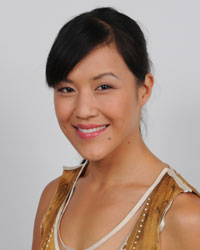
(Anh Do - Australia's Happiest Refugee segment on Sunrise. Click here to view.)He's one of our top comedians but Anh Do's early life as an impoverished refugee was no joke
IT was the gig from Hell. Harder than entertaining a gang of bikies with neck-to-toe tatts and a collective sneer; harder than telling jokes to unsmiling Jesuits who looked as if they'd rather be at a theology symposium.
It was the late 1990s and Anh Do -- a young Vietnamese refugee turned novice comedian -- was poised to go on stage at an RSL club in regional NSW. Only then did Do realise his audience comprised World War II, Vietnam and Korean war veterans. "Bloody hell!" he thought as he moved apprehensively into the spotlight. "Who organised this gig? . . . 200 guys sitting quietly remembering fallen comrades who were shot by Asian men . . . "
Do, who had fled Vietnam with his family when he was two, performed for five minutes and was met by a glacial silence. "It was survival, it was just survival," he tells Review, shaking his closely shorn head. "Just a few minutes in I'm thinking, 'There's an exit, there's an exit, I think I can outrun all of 'em.' " It didn't help that a Vietnam vet had started shooting imaginary bullets at the Vietnamese-Australian comic, with accompanying "pap! pap!" sound effects.
Today Do is one of Australia's leading comedians and an accomplished screen actor, and he has just written a memoir, the ironically titled The Happiest Refugee. Part turbulent family history, part rollicking account of an unconventional career, the memoir revisits the RSL incident -- the hardest gig he reckons he'll ever do -- with excruciating precision. The young Do ploughed on gamely in front of those ageing war vets, raiding his pantry of battler jokes about bull terriers, Datsuns, the housing commission and, of course, Kiwis.
"Slowly, slowly, I won them over," he writes. "The old guys finally realised that if they closed their eyes, this Vietnamese kid was actually just an Aussie comedian up there talking about his working-class childhood . . . After the show an old guy came up to me, slapped me on the back and said, 'Jeez, you're funny for a slope.' I could tell from his demeanour that he meant it as compliment. So I took it as one."
It was largely down to Do's generosity of spirit that this tense situation ended well, with an ex-Digger shouting him a beer. Now 33 and a father of three young boys, he says affably, "That's probably one of the greatest fringe benefits of doing comedy: being able to win over people who might have been averse to being friends with an Asian bloke before then." Do jokes that the RSL job was good for him: he is confident he will never again encounter an audience "even remotely that terrifying".
Such resilience, combined with an almost wilful optimism, seems to come easily to Do, who speaks with an Australian accent as broad as Julia Gillard's, peppering his conversation with "y'knows" and "some'ems". Indeed, his optimism and forgiving streak -- not to mention his keen sense of the ridiculous -- helped him ride out a childhood shadowed by tragedy in Vietnam, and disfigured by poverty and his father's drinking and violence. "All those tough times make you tougher," he says evenly. "Now if am without [something] I know I'll be sweet."
Review interviews Do at his home in Sydney's northwest, a middle-class suburb of modest weatherboard and brick bungalows, neat lawns and sudden eruptions of bush. From time to time he flashes his 1000W smile and cracks jokes -- some obviously rehearsed, some improvised -- but his demeanour is mostly serious, even grave. "I'm an introvert by nature," he says, then adds pointedly: "I love performing when I'm on stage, but people have often said to me, 'Jeez, you're not as funny as when you're on TV', and I say, 'Well that's because I'm just buying meat off you.' "
Do's tragicomic memoir has resonated so strongly with booksellers it was reprinted by publisher Allen & Unwin even before its official release this week. It's a high-octane trapeze act that swoops from stories of a dramatic escape from a communist re-education camp and the near-fatal boat journey Do and his family undertook from Vietnam in 1980, to Do's engagement party many years later on Sydney's ritzy north shore: his relatives turned up to an old-money address brandishing a huge glazed pig.
Do's book also documents how the promise of a new life in Australia curdled after his father, Tam, abandoned his wife, Hien -- who couldn't read or speak English -- and three children. Do was 13 at the time. He recalls how his brother, Khoa, was 11 when he negotiated to sell his mother's jewellery at Cash Converters so they could get the electricity reconnected.
"That makes an 11-year-old kid grow up pretty quick," says Do sombrely, as he sits at the family dining table where he writes most of his jokes.
Dressed in a pressed white shirt and jeans, Do cuts a blokier, more imposingly masculine figure than his self-mocking screen persona, tackling beefy front row forwards in a bubble-wrap suit for The Matty Johns Show, or spraying deodorant up his nostrils on the sketch program Thank God You're Here. On the day of this interview he has flown back from a stand-up gig for book chain Dymocks in Hobart. He's doing another corporate event in a few hours; it's clearly a busy day.
But mostly his work life is arranged so he can be around for his boys, aged six, four and one. Halfway through our interview, the children arrive home with Do's wife, Suzi, from the afternoon school pick-up, a blur of uniforms, backpacks, strollers and pint-sized friends. "Most days I can take my boys to school and pick 'em up, it's a wonderful option," says Do, with evident satisfaction. "I've structured it that way . . . my father wasn't around from when I was 13 and because of that mum had three jobs, [so] she wasn't around either. So I made a decision early on that I was going to spend a lot of time with the kids."
His settled family life with Suzi, a former lawyer and now a full-time mum, could hardly seem more different from the traumatised adolescence and impoverished teen years he describes in The Happiest Refugee. Do reveals that through his teenage years he fantasised about two things: meeting his father -- "a joyful reunion full of happy tears" -- and killing him.
He writes with lacerating honesty about the older man's drink problem: "About half a dozen times when I was a young teenager, my father hit me in a drunken stupor, without measure, without controlled words of admonishment to soothe the wounds, but wildly and with intent to cause pain . . . On the last occasion, I flung myself in his direction and pushed him into the wall, smacking my fist into the side of his head. I cried and screamed at the same time."
The comedian also reveals that, barely out of primary school, he slept with a knife under his bed, determined to defend his mother should his father arrive home drunk and spoiling for a fight.
There was a confrontation, but Do didn't have to resort to weapons. The older man wept bitterly and vanished into the night. Do didn't see him again for nine years.
He now believes his father's life was corroded by guilt provoked by several catastrophes: the murder of an uncle in Vietnam; a teenager on the family's refugee boat jumping overboard and drowning; the loss of his parents' and other relatives' savings when an Australian duck farm went bust.
Asked if the scenes depicting his father's violence were hard to write, Do fixes his large brown-black eyes on the middle distance and says: "Writing about seeing my father for the last time and having a knife ready to defend my mother -- I wrote that with, you know, tears dripping on to the computer keyboard. But I wrote that whole scene within five minutes . . . It was a very easy book to write, but at the same time an emotionally gruelling experience."
He has since reconciled with his dad, who has survived a brain tumour and is the comic's unofficial roadie when he works in Melbourne. Do's siblings do not enjoy the same relaxed relationship with their father, but he insists "it made it easier for me to forgive my dad after learning more about him . . . It's very hard for us to imagine what it would be like to go through a war."
All this may make Do's book sound as if it was conceived at the wailing wall of misery memoirs; in fact, The Happiest Refugee is animated by a humour so vivid it might have been filmed in 3-D. Do invests his upbringing in Sydney with a kind of wry exoticism, from the endless stream of uncles who were named according to birth order (Uncle Six, Uncle Nine), to living with his cousins, illegally, in a clothing factory, to the grandmother who "used to come in after a hard day's work in the garden, crack open a can of VB, put her feet up and sing karaoke".
Yet the poverty was real and painful enough. Do and his siblings learned how to hide from unpaid landlords, and his mother often couldn't afford the sports uniforms and textbooks required by the Catholic school St Aloysius, to which her sons had won partial scholarships. Do copped detention for "forgetting" his nonexistent textbooks rather than admit he couldn't afford them.
Yet he rarely engages in self-pity, often wringing humour from the everyday humiliations of never having enough. In high school, while his basketball teammates wore designer sports shoes -- Reebok Pumps or Air Jordans -- he turned up in Kind Lions, bought for $15 at an Asian grocery store. To get traction on the court surface, he rubbed the soles in soft drink.
Despite his turbulent teenage years, Do did well at high school and studied law at the University of Technology, Sydney. When he graduated, business firm Andersen Consulting offered him a sought-after job. He says: "They were telling me, maybe a 60-hour work week. I asked a comedian, 'How many hours do you work?' He said four. I think I chose comedy out of laziness more than anything."
Do says he stumbled into comedy by accident. While a law student, egged on by friends, he braved the stage during amateur comedy nights at Sydney's Harold Park Hotel. He was 22 when he won the hotel's comedian of the year award, and this served as a launch pad to a professional career. Since then he has appeared on The Footy Show, Rove, Good News Week, Thank God You're Here and The Panel, and last year hosted the sports quiz program The Squiz on SBS.
He has performed at the Adelaide Fringe Festival, Melbourne's International Comedy Festival and the Sydney Comedy Festival, and has twice staged solo shows at the Sydney Opera House. In 2008 he filmed a Beijing Olympics special for the Ten Network, a brief that included drinking (and vomiting up) juice from a snake's gall bladder. In 2007 he appeared on Dancing with the Stars. The judges weren't always onside but the viewers were: their votes catapulted him and his outsize grin into the grand final (which he lost to the glamorous actress Bridie Carter). In his book, he recalls how this experience "melted away all those moments in my life, and there have been very few to be honest, where I'd copped racism and been made to feel like an outsider".
As well as making a living making people laugh, Do is an actor and filmmaker. In 2003, he and his brother Khoa released the gritty feature film The Finished People. Produced by Anh and directed by Khoa, it starred street kids from Sydney's Cabramatta who played characters based on their own experiences. Despite a budget ($5000) that barely qualified as shoestring, it was nominated for three AFI awards and won an Inside Film prize. It also led to Khoa being named 2005's Young Australian of the Year.
The brothers again collaborated on the feelgood film Footy Legends (2006), about a team of likable Sydney no-hopers who pin their hopes on a rugby league competition, which featured Claudia Karvan as a social worker and Do as the lead character, Luc, a big-hearted young man who is trying to find work while raising his sister. He quips: "I described him in detail [in the script] to look like me so the production company couldn't sneak in another Asian actor."
The Do family's journey from Vietnam is at once a cautionary tale and the story of a desperate generation whose children eventually make good in their adopted country. Do says his family fled the communist country after being persecuted for having fought "alongside Aussie soldiers in the Vietnam War. One of my uncles was a sapper who cleared landmines for Anzacs."
He sees the heated asylum-seeker debate through the prism of this experience: today, he says, if an Afghan performed a similar job, "I reckon a lot of Australians would say, 'Let's look after him.' But the way we're viewing it, we're not even giving these people a chance to tell their stories. We're sort of judging them as illegal criminals."
The Do clan left Vietnam in a boat they bought. They were twice robbed and terrorised by pirates and ran out of food and water before they were rescued and taken to a Malaysian refugee camp. From there they came to Australia as refugees. Do says his family often laughs about the boat trip that almost killed them (and did kill a young family friend). This jet-black humour initially shocked Suzi but, as Do explains, "it doesn't mean that we weren't frightened or that it wasn't life-threatening, but that's how we deal with it". He then leans across the table and makes a startling confession: "Before, I was quite scared of my story, even ashamed of it." Because his dad left? "All of it," he says emphatically. "As a bloke you just don't want people to know anything that might make you seem vulnerable or weak. You put on a facade that everything's sweet, you know." He pauses to reflect. "I've learned now that telling that story is OK."
SourceI just found the
Official Anh Do Page!
 |
| Release date: 1st Week of September |